Quick answer:
CNC milling and manual milling are both material removal processes, but they differ in how the cutting tool and workpiece are controlled. CNC milling uses computer-programmed commands to move axes automatically, delivering higher repeatability and speed for medium-to-high volume production. Manual milling relies on operator skill to position the part, making it flexible for one-off adjustments but slower and less consistent at scale. The right choice depends on your part complexity, required tolerances, and production volume.
YPMFG works with engineering teams and procurement buyers who need to understand these differences before committing to a manufacturing route.
Understanding the Core Misconception
Many buyers search “CNC vs milling machine” because they believe these are two completely separate categories of equipment. In reality, a CNC mill is still a milling machine — it simply adds digital control to the traditional vertical or horizontal milling process.
The real comparison most factories need is between CNC milling and manual milling, because both achieve the same fundamental operation: rotating a cutting tool removes material from a workpiece to create the desired shape.
YPMFG supports projects where selecting the right machining approach directly affects cost, lead time, and dimensional consistency.
How CNC Milling Works
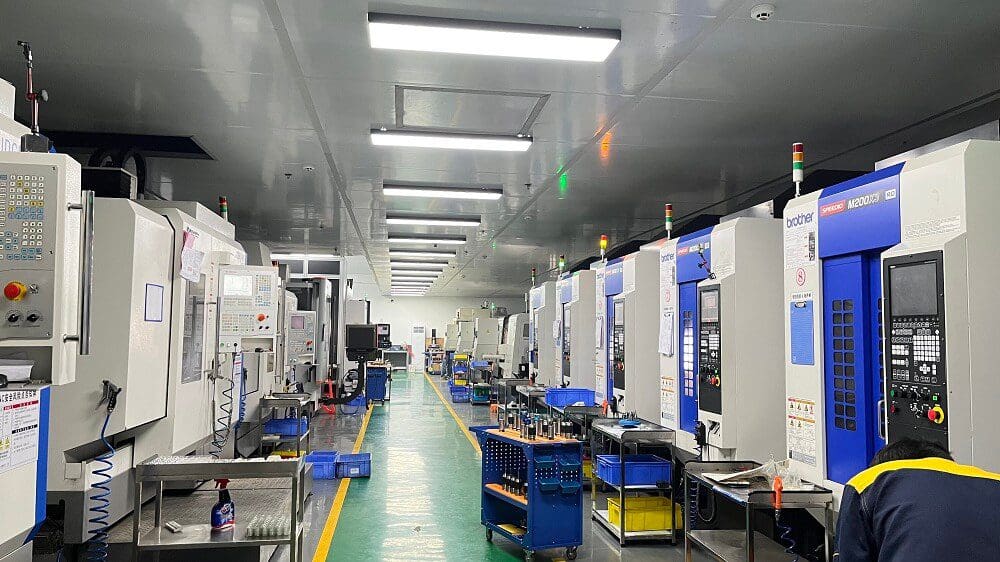
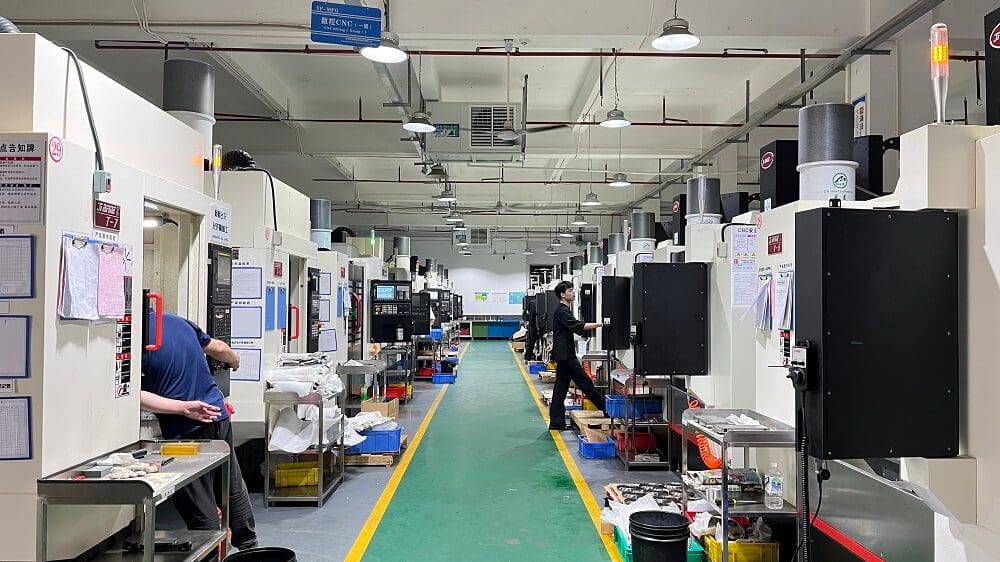
CNC milling uses a computer numerical control system to automate the movement of the cutting tool and the worktable along multiple axes. A CAD model is translated into G-code, which the machine controller executes with sub-millimeter accuracy across repeated cycles.
Key characteristics of CNC milling include:
Multi-axis movement typically ranging from 3-axis to 5-axis configurations
Automated tool changing through integrated tool magazines
Consistent cycle-to-cycle output once the program is validated
Capability to hold tight tolerances commonly between ±0.01 mm and ±0.05 mm depending on machine class and part geometry
This level of automation makes CNC machining the preferred route for series production, complex geometries, and parts requiring surface finish consistency across multiple batches.
How Manual Milling Works
Manual milling requires the operator to position the workpiece and select cutting parameters by hand using dials, levers, and visual inspection. The machinist controls feed rate, depth of cut, and positioning in real time based on experience and reading marks on the machine column.
Important aspects of manual milling include:
Lower initial equipment investment compared to CNC systems
Faster setup for single prototype parts or simple fixtures
Greater flexibility to adjust cutting parameters on the fly
Output quality heavily dependent on individual operator skill level
Manual mills remain useful in toolroom environments, maintenance workshops, and situations where parts need rapid iterative changes without writing new programs.
Key Differences at a Glance
The table shows that neither method is universally superior — they serve different stages and volumes in a manufacturing workflow.
YPMFG evaluates each project against these factors before recommending a machining strategy.
When CNC Milling Is the Better Choice
CNC milling delivers clear advantages when your project involves any of the following conditions.
Choose CNC when you need:
Production quantities above roughly 10 to 50 identical parts
Geometries with pockets, slots, drilled hole patterns, or contoured surfaces
Documented dimensional inspections and first-article reports
Consistent surface finish across multiple batches
Integration with downstream processes such as threading, tapping, or secondary operations on the same setup
Projects that miss these criteria often see diminishing returns from CNC investment, especially for very low-volume custom brackets or simple flat features that a manual mill can produce faster with less programming overhead.
When Manual Milling Still Makes Sense
Manual milling has not disappeared from modern machine shops. It remains the practical choice in several specific situations.
Manual milling is appropriate when:
You need one-off experimental parts with no existing drawings
The part geometry is simple enough that programming time exceeds machining time
A broken fixture or worn tool requires immediate on-the-spot correction
Budget constraints make programming hours hard to justify for a single unit
The workshop operates a small footprint and cannot accommodate a CNC machine
Engineers who send specifications to YPMFG receive guidance on whether their part benefits from CNC automation or can be machined more efficiently using conventional methods.
Cost Factors Beyond the Hourly Rate
Procurement teams sometimes compare only the machine hourly rate and overlook hidden cost drivers.
The total cost picture includes:
Programming and CAM setup time, which is higher for CNC but amortized over quantity
Fixturing and clamp design, which may be simpler for manual work
Inspection and documentation requirements tied to lot traceability
Scrap and rework risk, which tends to be lower with CNC for complex parts
Operator labor allocation, since one CNC operator can run multiple machines
A part that appears cheaper to machine manually on paper may end up costing more once quality control and rework are factored in.
Quality and Tolerance Considerations
Tolerance capability is one of the most frequent concerns for buyers evaluating machining processes.
CNC machines maintain positional accuracy through closed-loop servo systems and ball screw drives. Repeatability means the same program produces nearly identical parts across hundreds of cycles. Manual mills depend on the machinist’s hand-feel and reading precision on graduated scales, which introduces natural variation between operators and between shifts.
For critical features such as bore alignment, parallelism between mating surfaces, or tight hole positional tolerances, CNC is generally the safer selection. YPMFG provides engineering reviews that map each dimension on your drawing to the most appropriate machining method.
Material Compatibility Overview
Both CNC and manual mills can process the same broad range of materials, including aluminum alloys, steel grades, stainless steel, titanium, brass, and engineering plastics. The difference lies in how material removal is managed rather than what can be cut.
CNC systems allow consistent coolant delivery, optimized spindle speeds, and controlled feed rates programmed specifically for each material. Manual operations require the operator to adjust these parameters in real time, which can lead to inconsistent chip formation and tool wear when cutting harder alloys like stainless steel or Inconel.
Choosing the right material process pair matters for CNC parts manufacturing because tool life and surface quality are directly affected by incorrect speed and feed selection.
Common Questions Buyers Ask
Is CNC milling the same thing as machining?
CNC milling is one type of machining process. Machining is the broader term that also includes turning, drilling, grinding, and electrical discharge machining. When people say “CNC machining,” they often specifically mean CNC milling in practice.
Can a manual mill achieve the same tolerances as a CNC mill?
In limited cases, yes. A highly experienced machinist can hit ±0.025 mm on straightforward features. However, achieving that consistently across multiple parts or complex 3D contours is far more reliable on CNC equipment.
What is the typical lead time difference?
Manual setups can produce a single part in under an hour for simple geometries. CNC parts require programming and fixture setup before the first cut, usually adding several hours to a day. For volumes above 50 pieces, CNC total lead time typically becomes shorter because cycle time per part drops significantly.
Should I send drawings to multiple suppliers before deciding?
Yes. Sharing your drawings allows each supplier to recommend whether CNC or manual processes apply to different features on the same part. Hybrid approaches are common and often reduce overall cost.
Do I need CAM programming knowledge to request a quote?
No. Most shops accept standard CAD files and drawings. YPMFG handles the CAM programming internally and provides manufacturing recommendations during the engineering evaluation stage.
Making a Better Long-Term Decision
The choice between CNC and manual milling is not about picking the newer technology over the older one. It is about matching the process to your part’s geometry, tolerance requirements, and production volume. Complex parts in medium to high quantities almost always benefit from CNC automation. Simple one-off adjustments and quick fixes still belong on a manual mill.
When you send your specifications to YPMFG, the engineering team reviews each feature, recommends the most efficient machining approach, and provides a transparent quote that reflects the actual process mix. You can request a free engineering evaluation, ask for a detailed quote, or share your CAD files for review.